Podar el viento
Pruning the Wind
Fiction featureSocial drama
StageAdvanced development
GrantsDECINE 2026, IMCINE
Writer and directorHellen H. Castro
ProducerJuan Eduardo Navarrete Pajarito, La Milpa Cine
The story
Judith is a girl from the highlands of Morelos who repairs what others give up for lost. She wants to keep studying. Promised work and school, she comes to the city, to Luisa’s house.
Luisa offers her a roof, a weekly wage and help enrolling in secondary school. None of it is true. Little by little, the job becomes confinement: Luisa docks her food, locks away her papers and boards up the only window in her room. When Santiago, Mónica’s son, is born, Judith is forced to raise him.
Judith resists with what she has always had: she observes, calculates and understands how systems work. When she learns her mother has left the village to look for her, she plans her escape. She doesn’t leave alone: she takes Santiago with her.
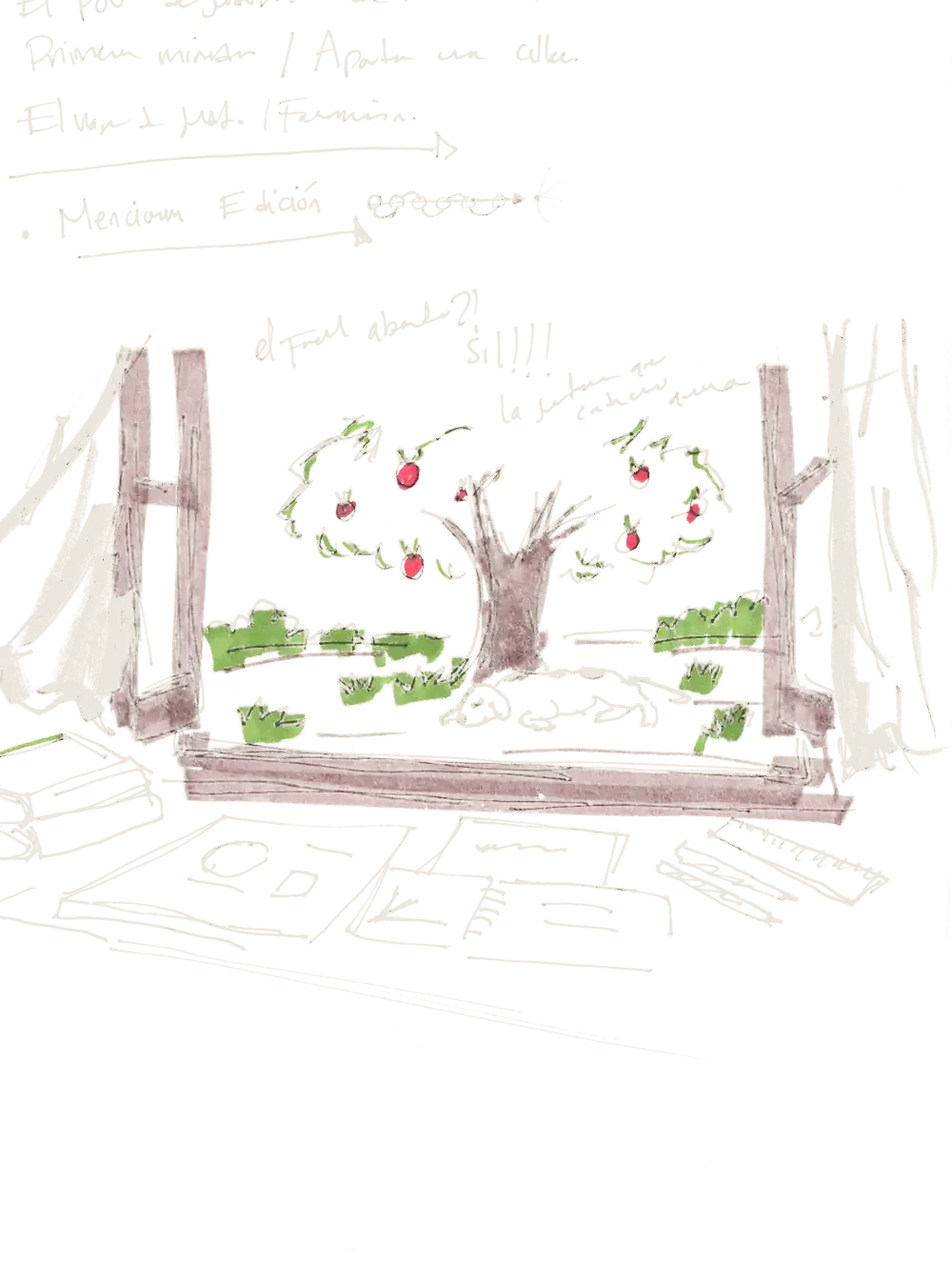
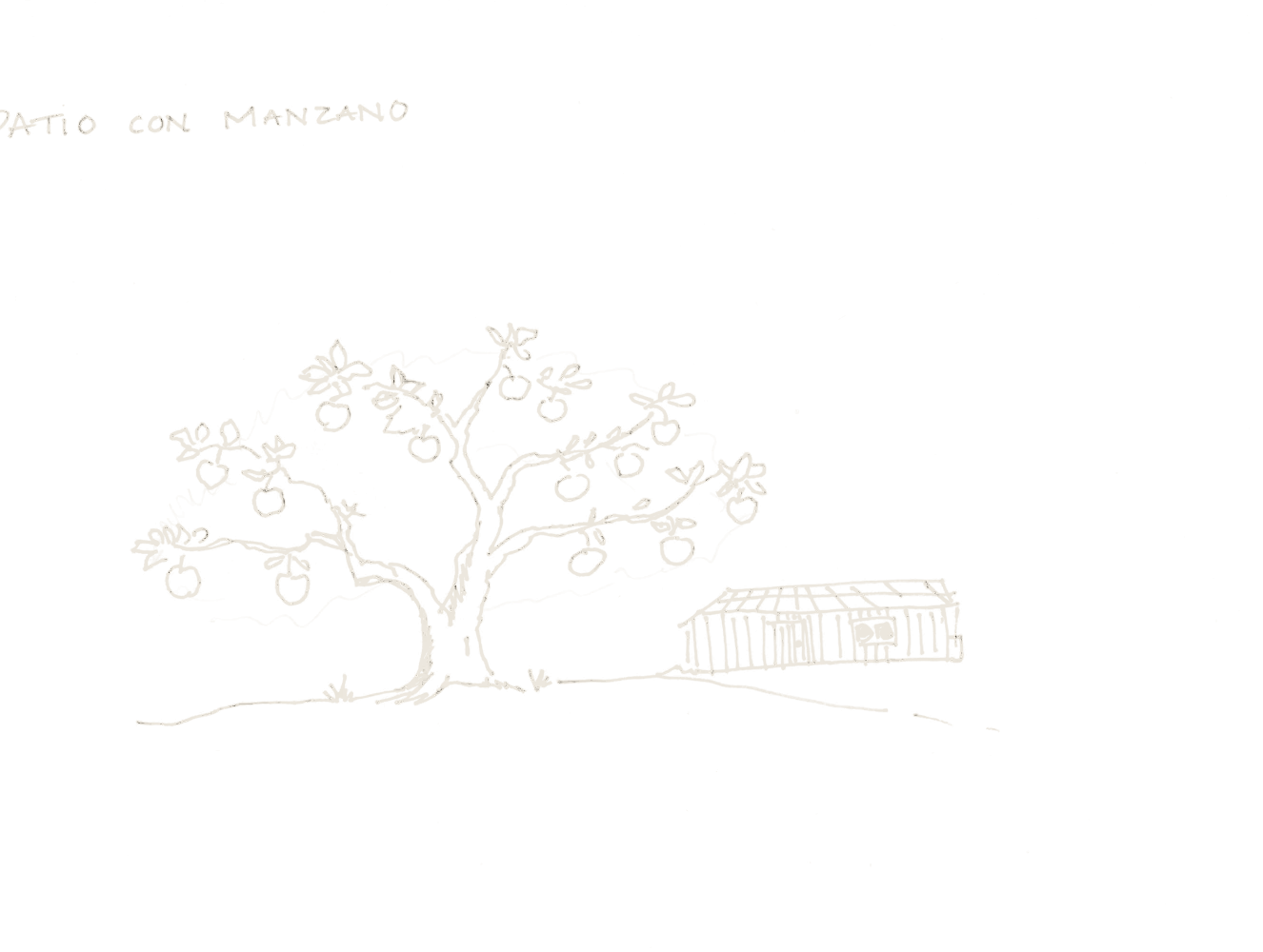
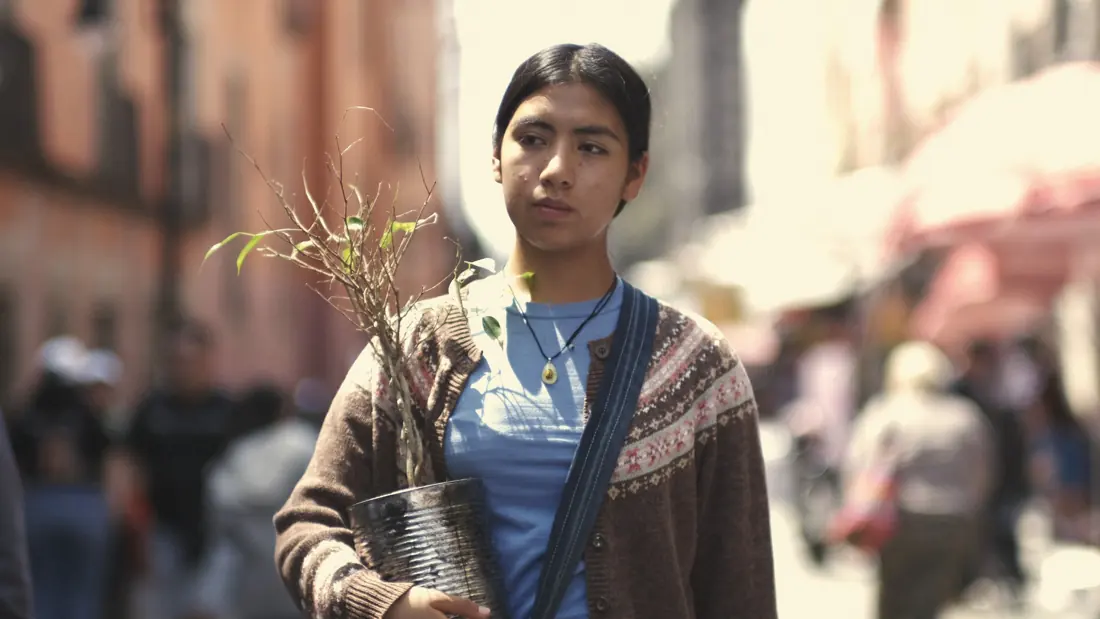
With her travels an apple tree she planted as a child from stolen seeds, in a makeshift pot. It holds on, like her. It bears a single fruit.
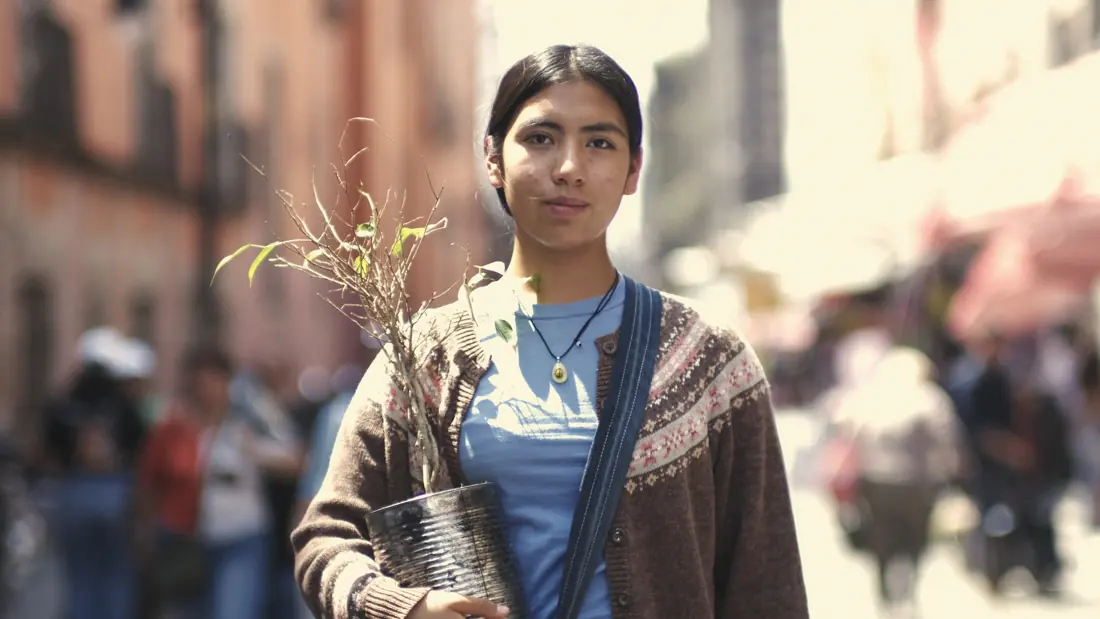
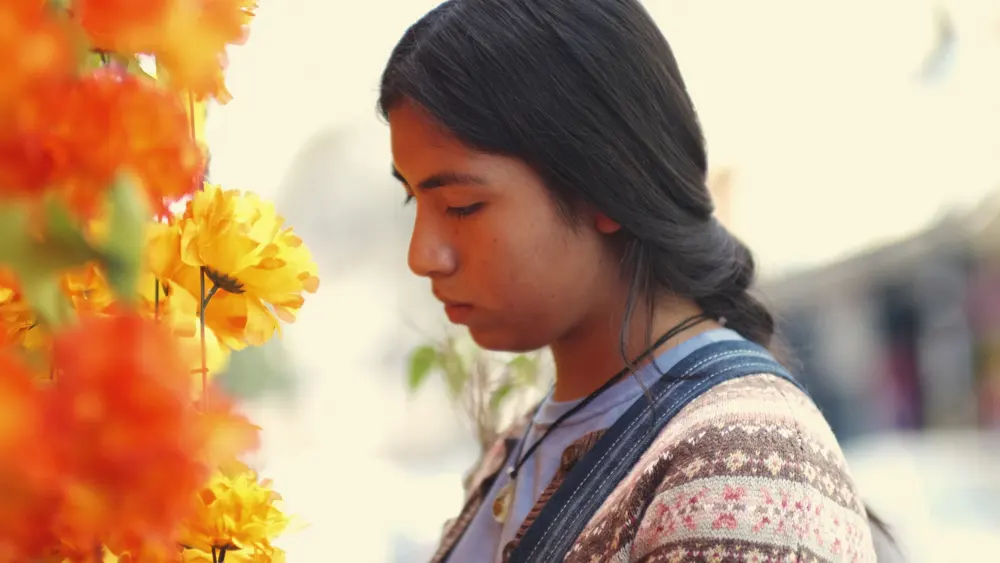
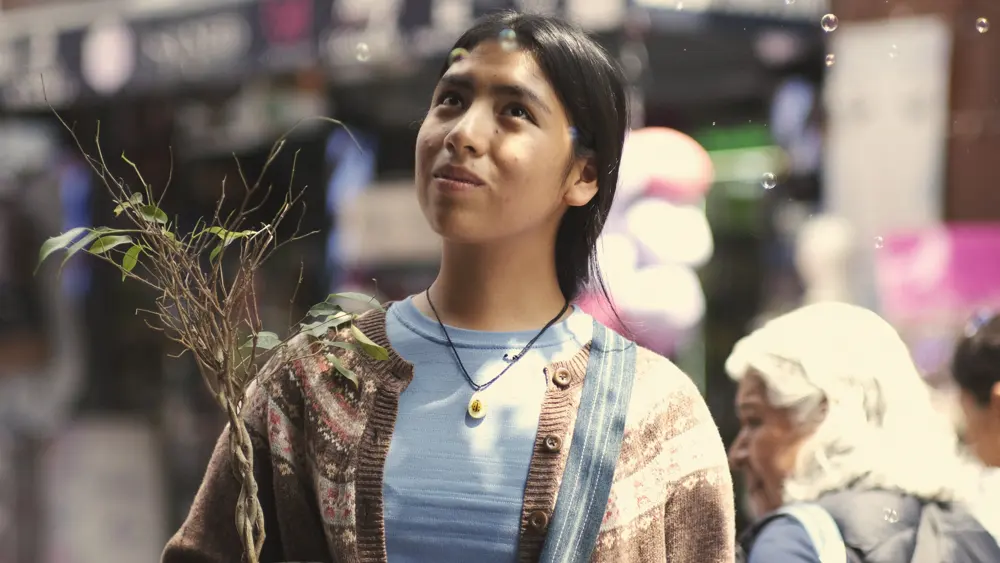
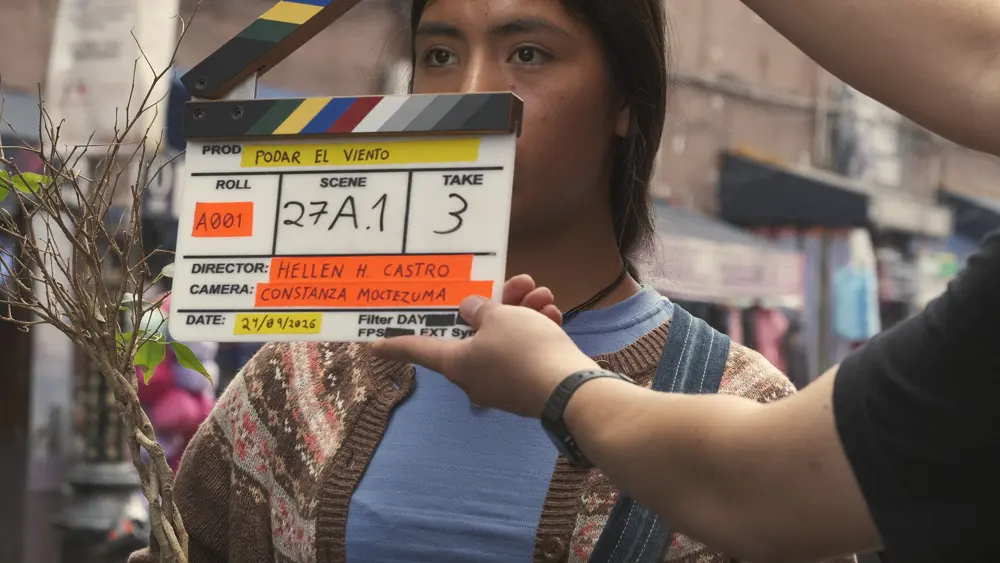
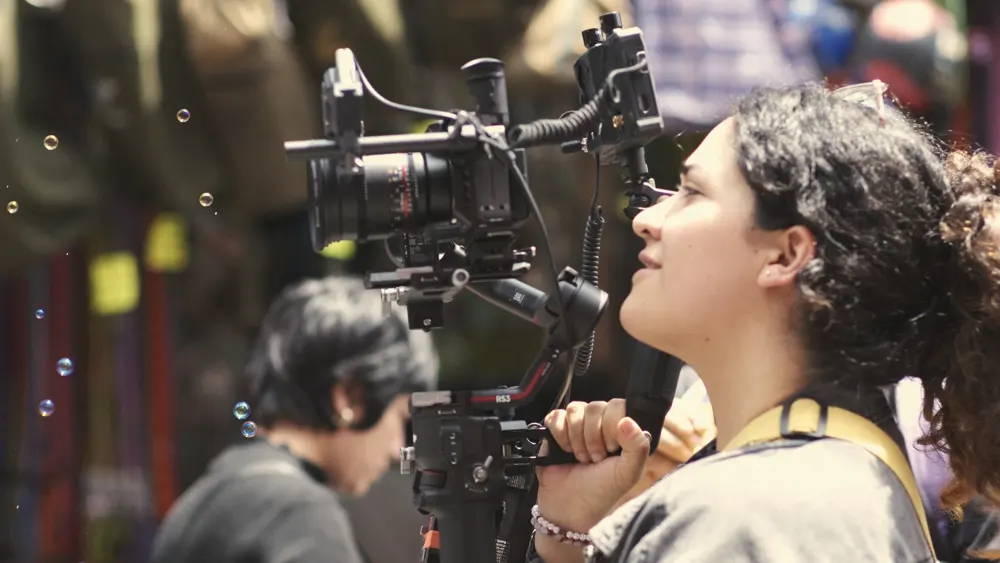
Stills from the teaser, shot in September 2026 in Mexico City.
Director’s statement
One of my most vivid childhood memories is the road trips between Puebla, Morelos and Mexico City. The volcanoes appeared through the window; inside the car, the steady hum of the tires on the pavement calmed me. I didn’t know then that this helped me regulate. I didn’t know I was autistic, either.
My diagnosis in 2023 gave me a language to understand sensitivities that had always been with me. That understanding built a bridge to Judith: I know the effort of living in an environment that doesn’t speak your language.
The land runs through me too. Going back to the Sierra de Puebla and the highlands of Morelos during research let me recognize a place I barely knew, even though I was born there. I want to look at how a promise of help turns into exploitation, and how the duty to obey and be grateful makes abuse hard to recognize.
Hellen H. Castro
She is a poor girl, not a pitiable one.
From the director’s proposal
Seeing and hearing through Judith
The whole film is built around one decision: to see and hear from inside Judith’s body. The film language doesn’t explain or diagnose her. It stays with her.
Camera
From extreme close-up to extreme wide shot: a screw, a vibration or a cable make sense once we discover the system they belong to. In calm moments the camera settles; in overload it moves in, loses stability and crops the space.
Light and haze
Steam from the irons, smoke and boiling water fill Luisa’s house with a haze that clears as Judith understands what is happening to her. More clarity for her, even as her situation gets worse.
Color
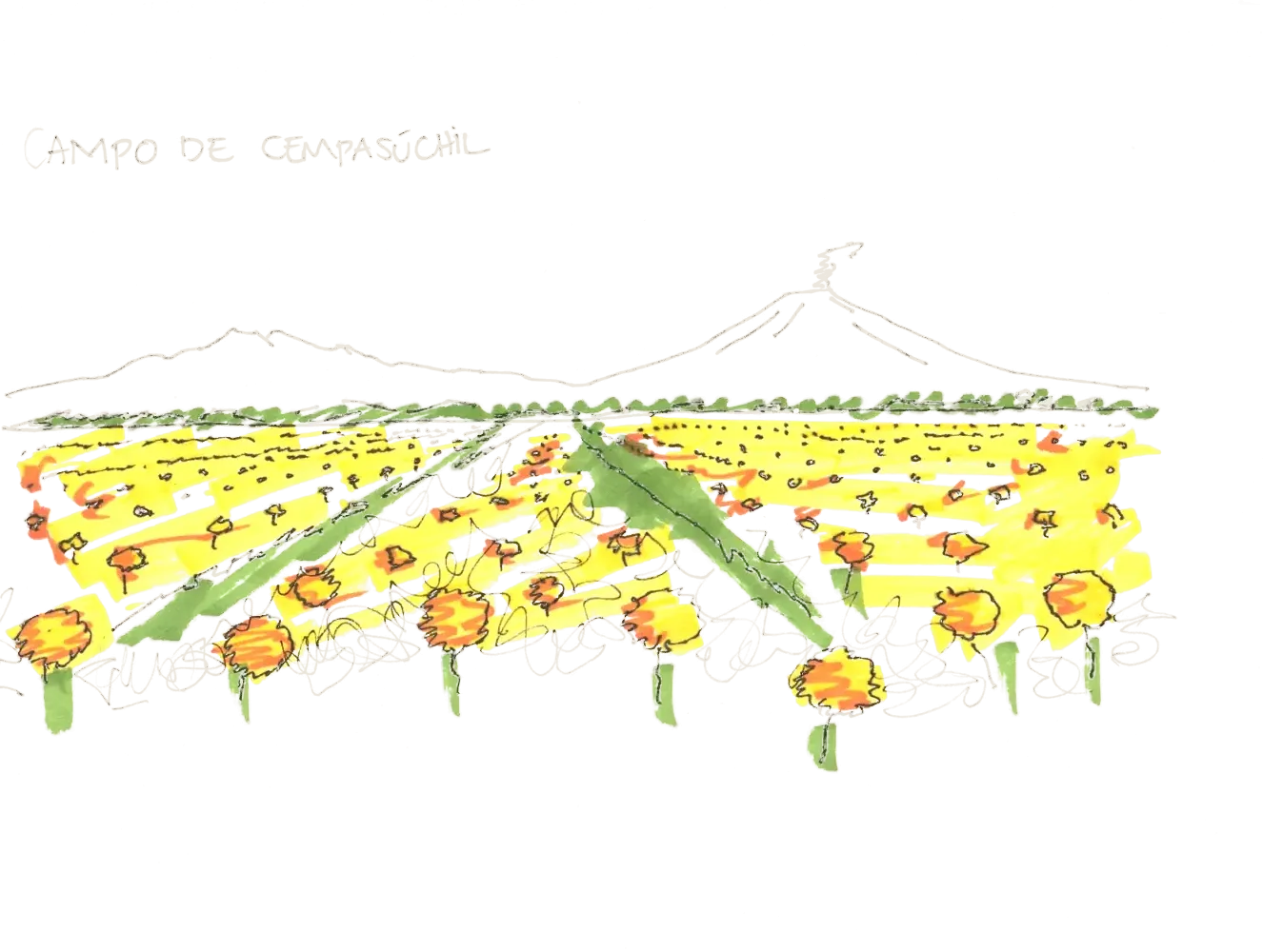
Warm and saturated in the countryside: sky, grass, earth, clay, marigolds. Cold and muted in the city. Red appears only in what matters: the apples, Santiago’s ribbon, blood.
Sound
Listening with Judith, not to her. Two worlds: the freedom of wind and distance, and the mechanical confinement of the iron, the clock and the refrigerator motor. Violence almost always happens off screen; we hear what comes before it and see what it leaves behind.
Editing
Time follows Judith’s state. Repairing, sorting and checking get their full duration; overload cuts gestures off before they finish. In Luisa’s house, a year and a half feels like a single workday.
Performance
We are looking for performers who can sustain Judith’s observation, her work with objects and her response times, without turning her autism into a collection of traits. Her silence has many meanings.
Judith’s objects
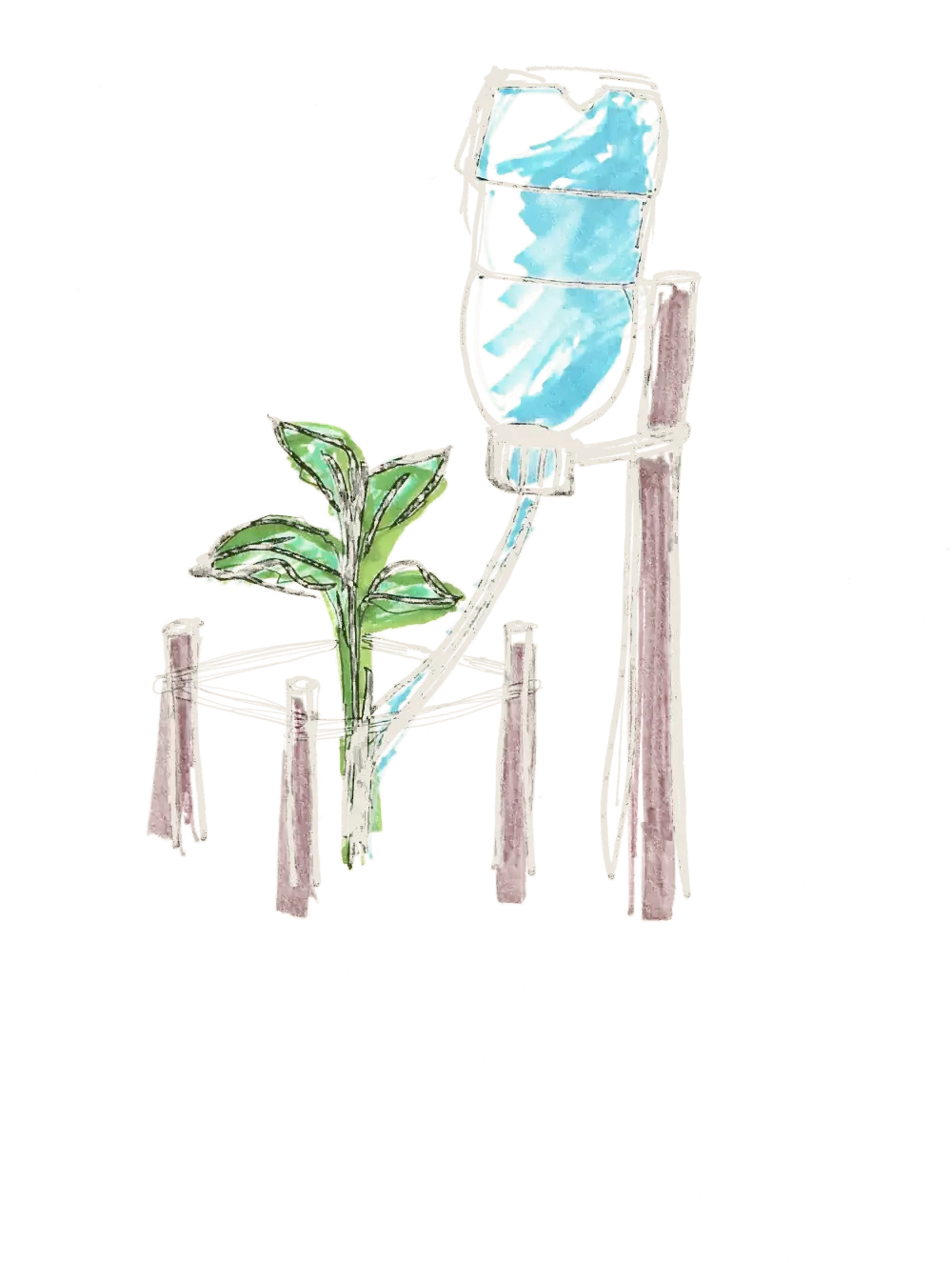
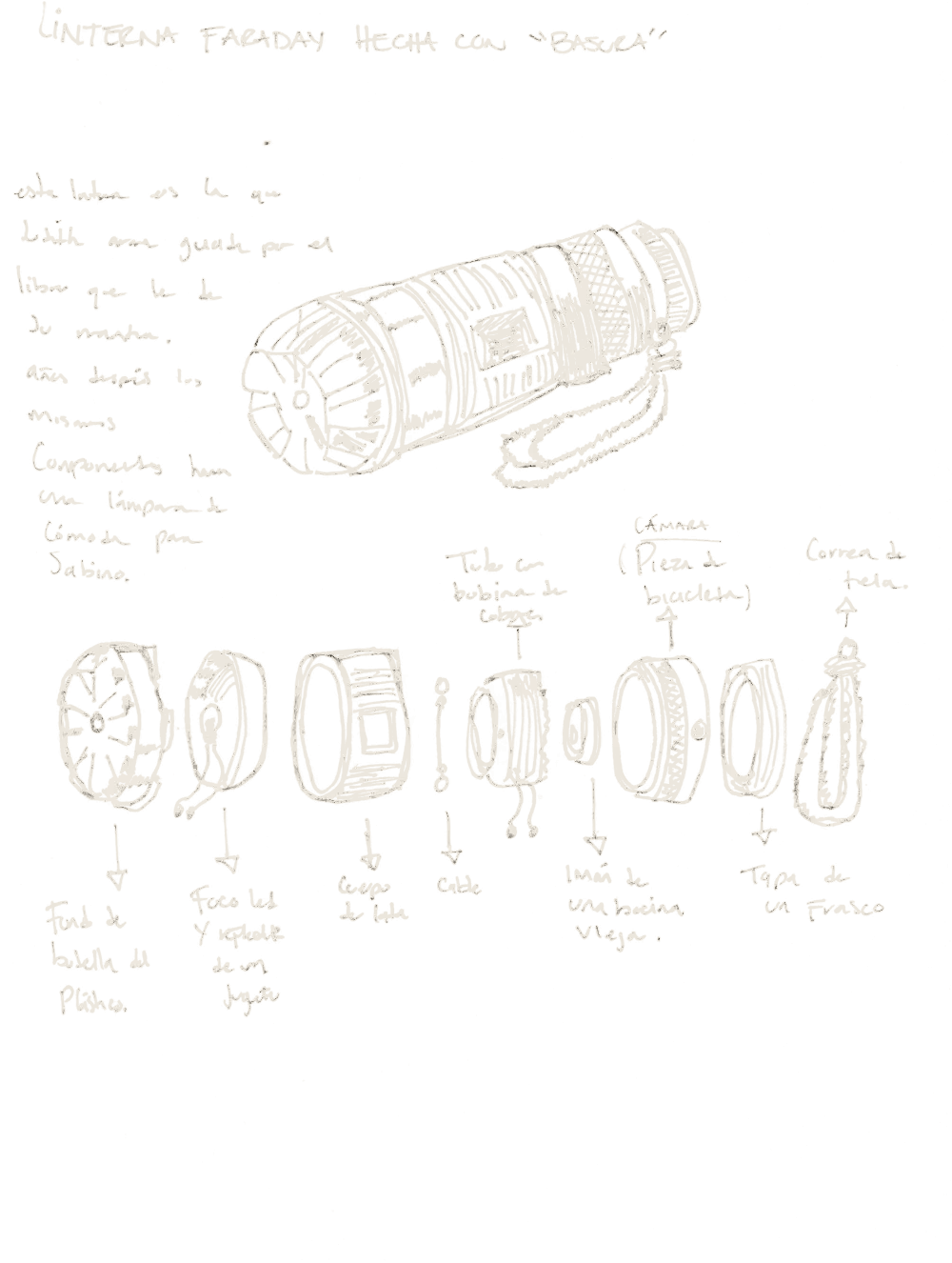
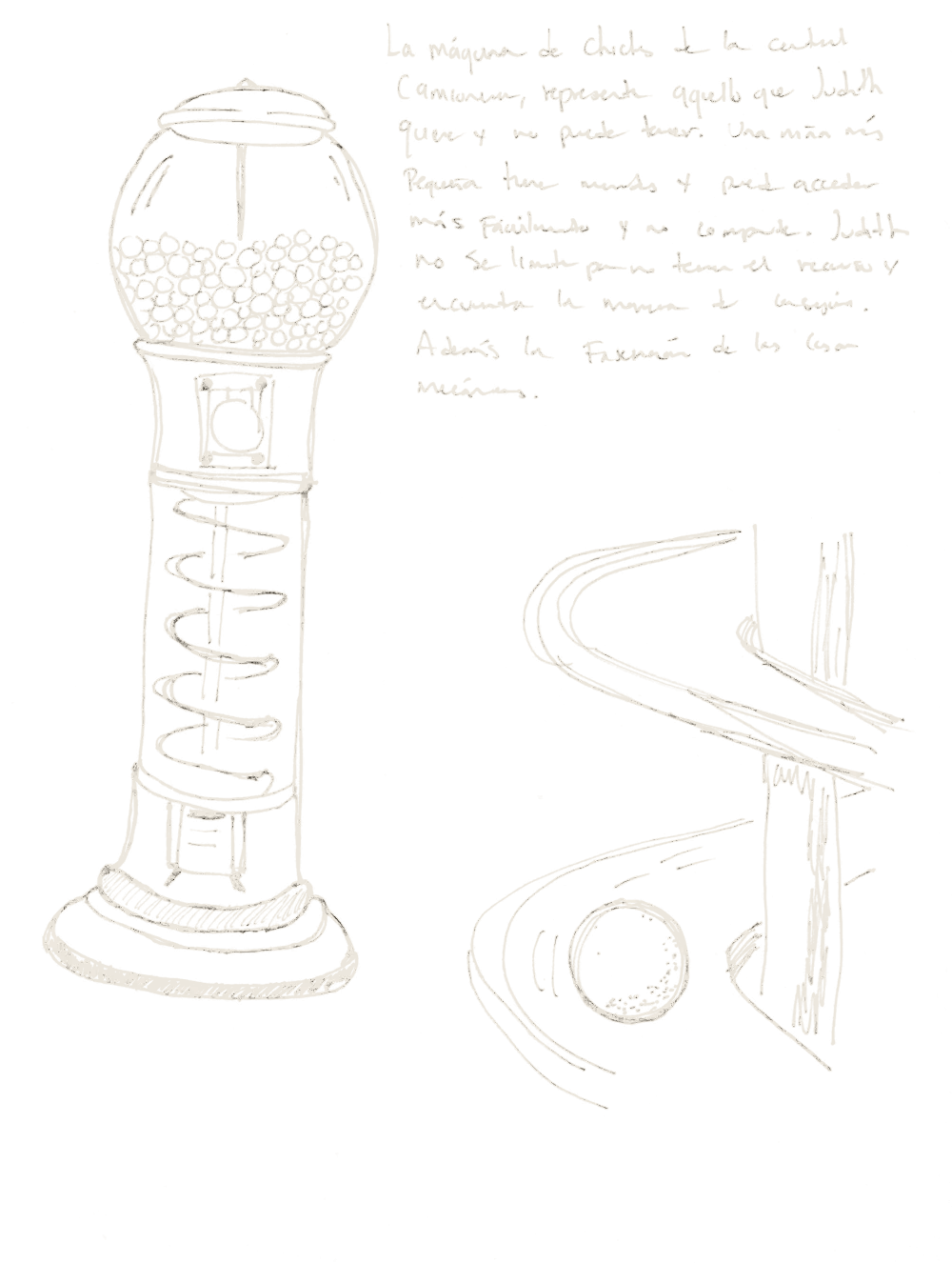
Drip irrigation made from a bottle, a flashlight built from recycled parts, the coin rolling down the slide of a gumball machine. They are not props: they are her way of thinking made solid, and should read as engineering, not crafts.
From the director’s notebook
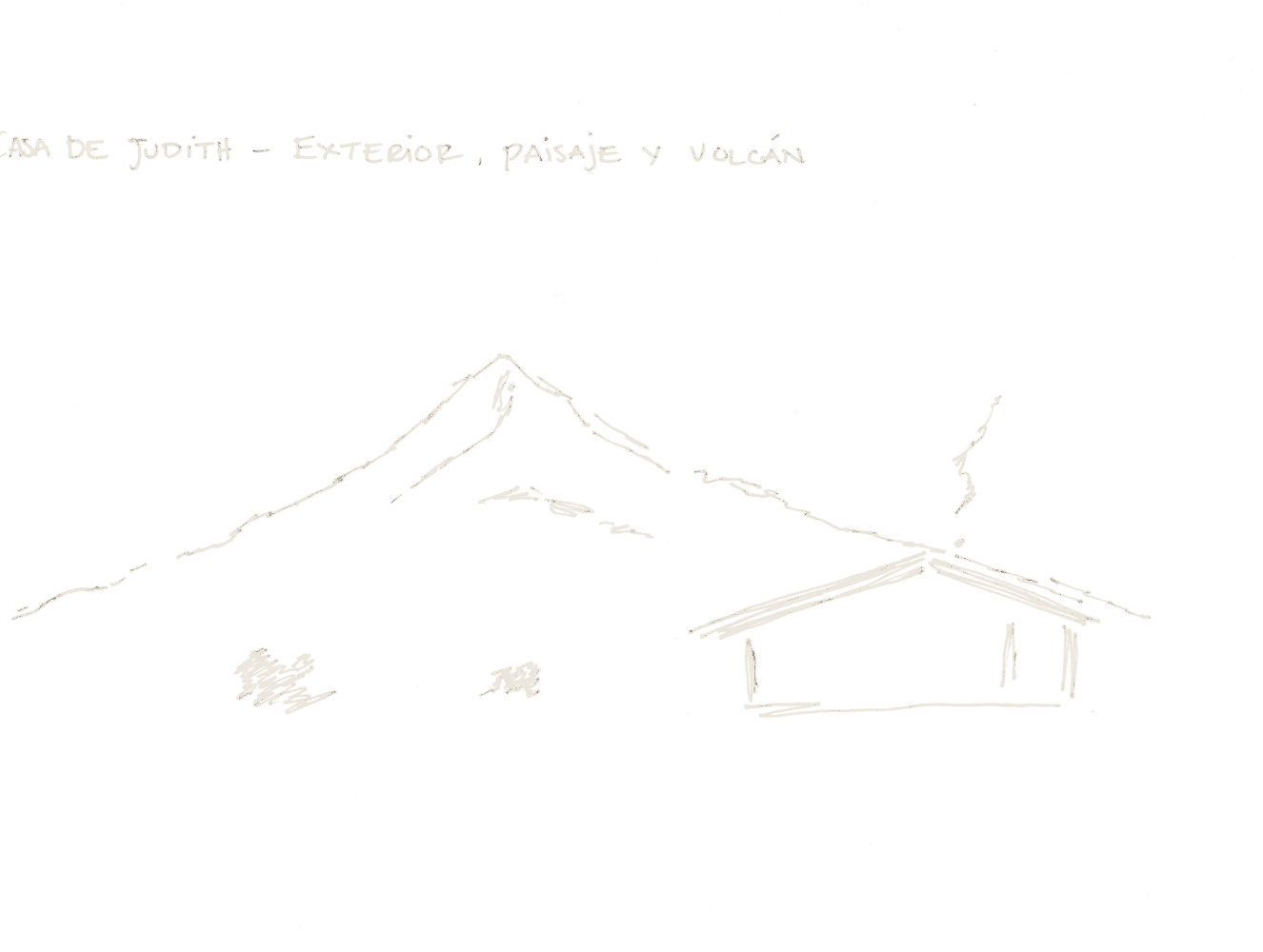
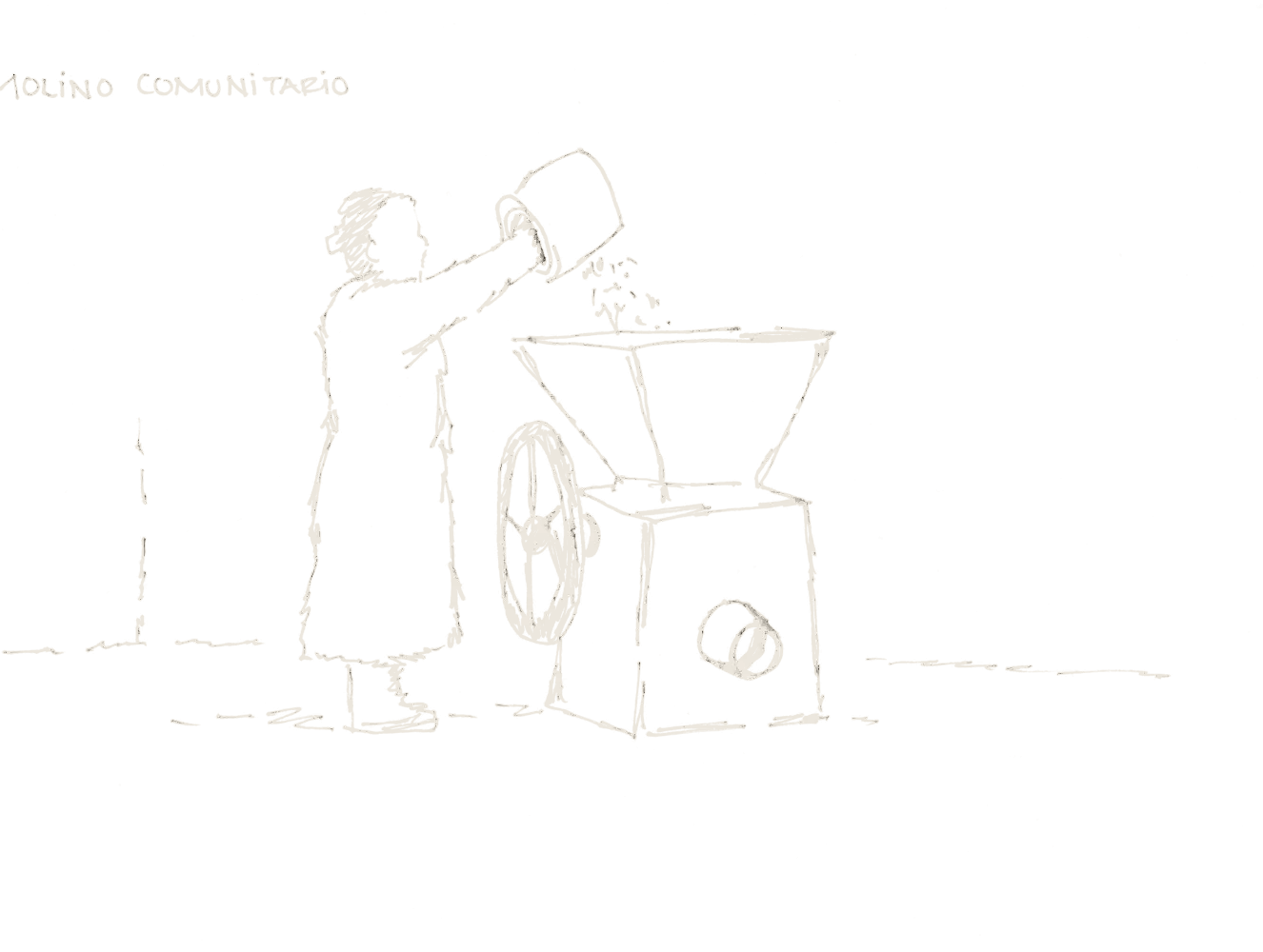
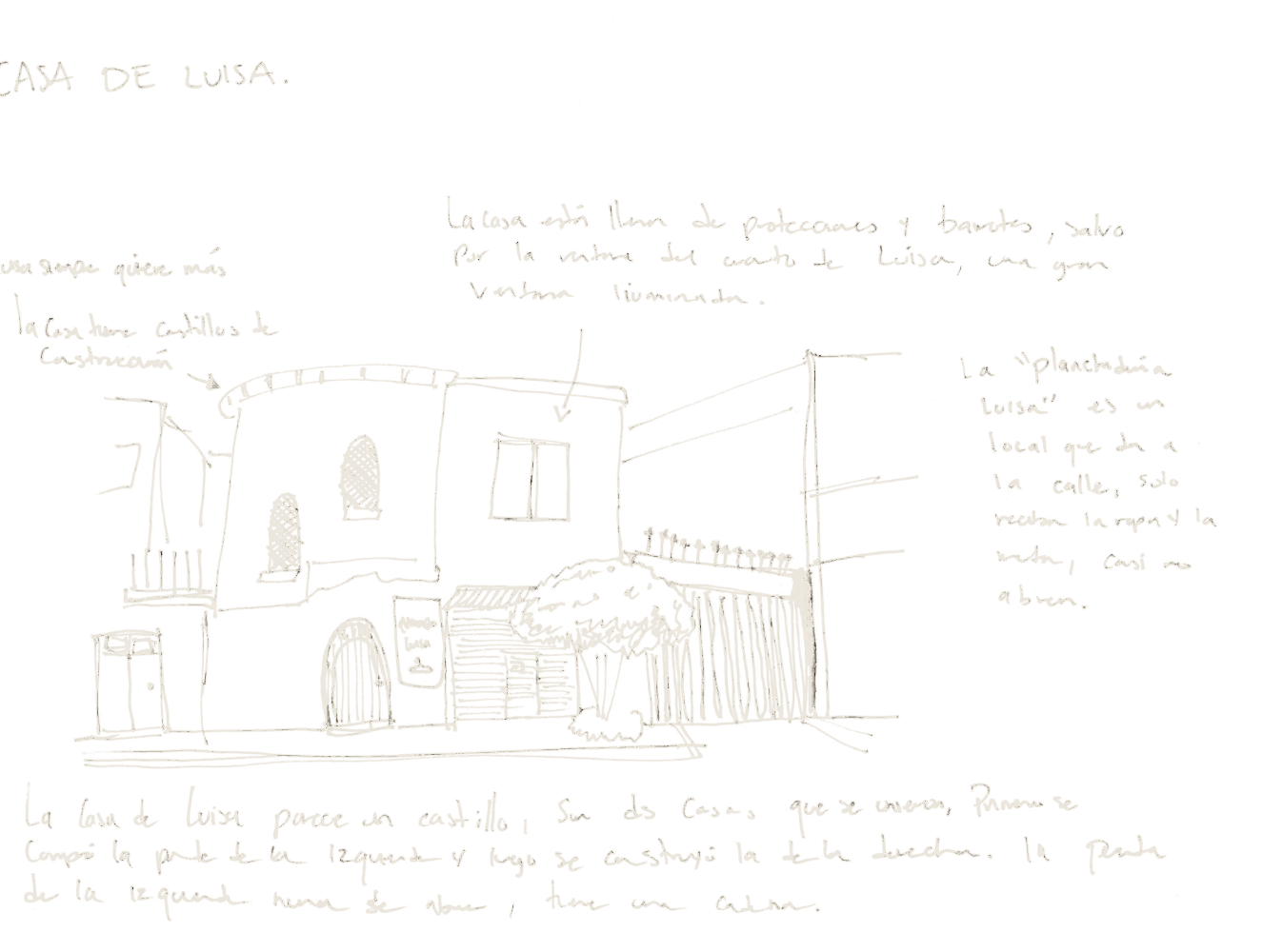
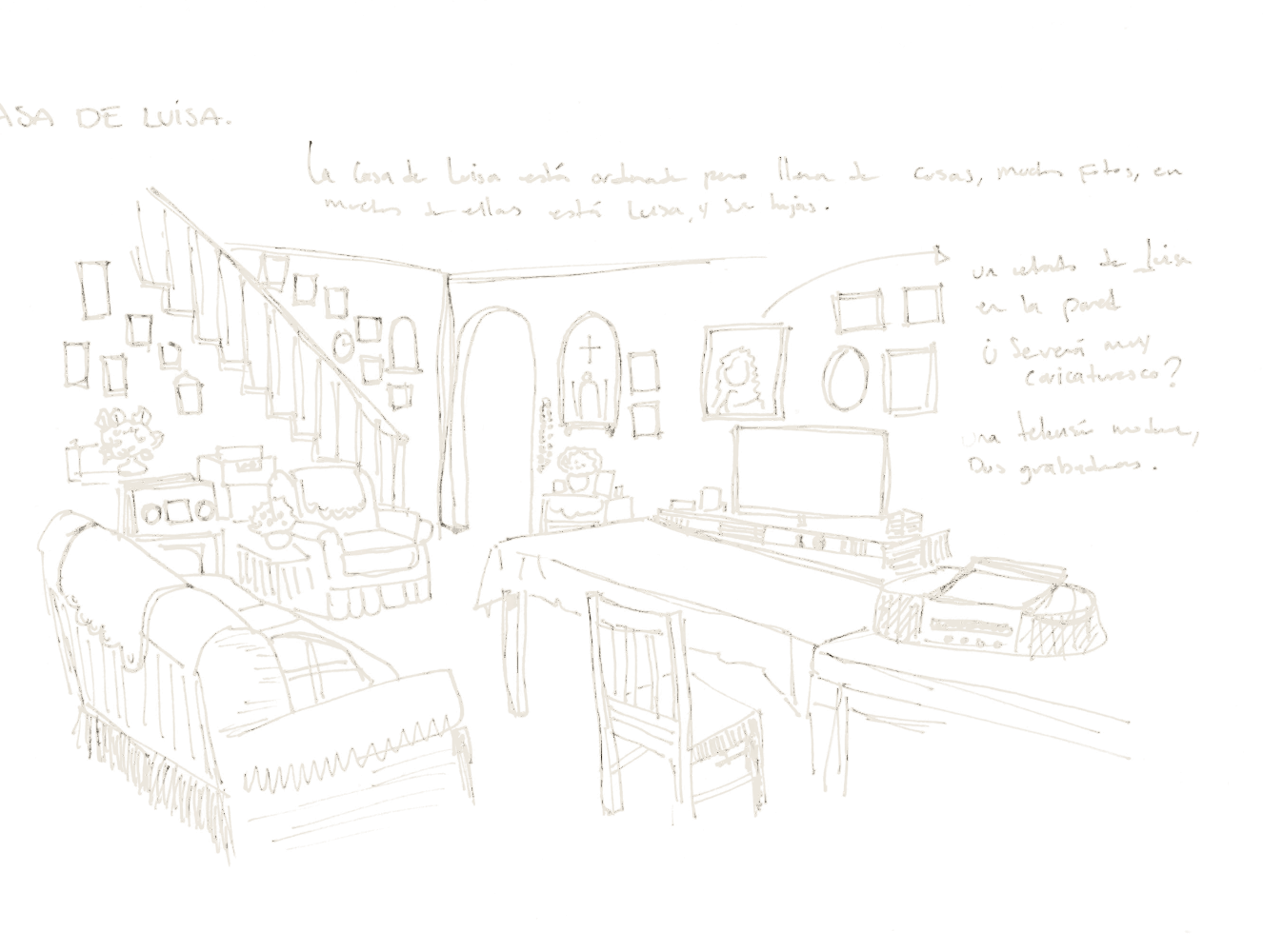
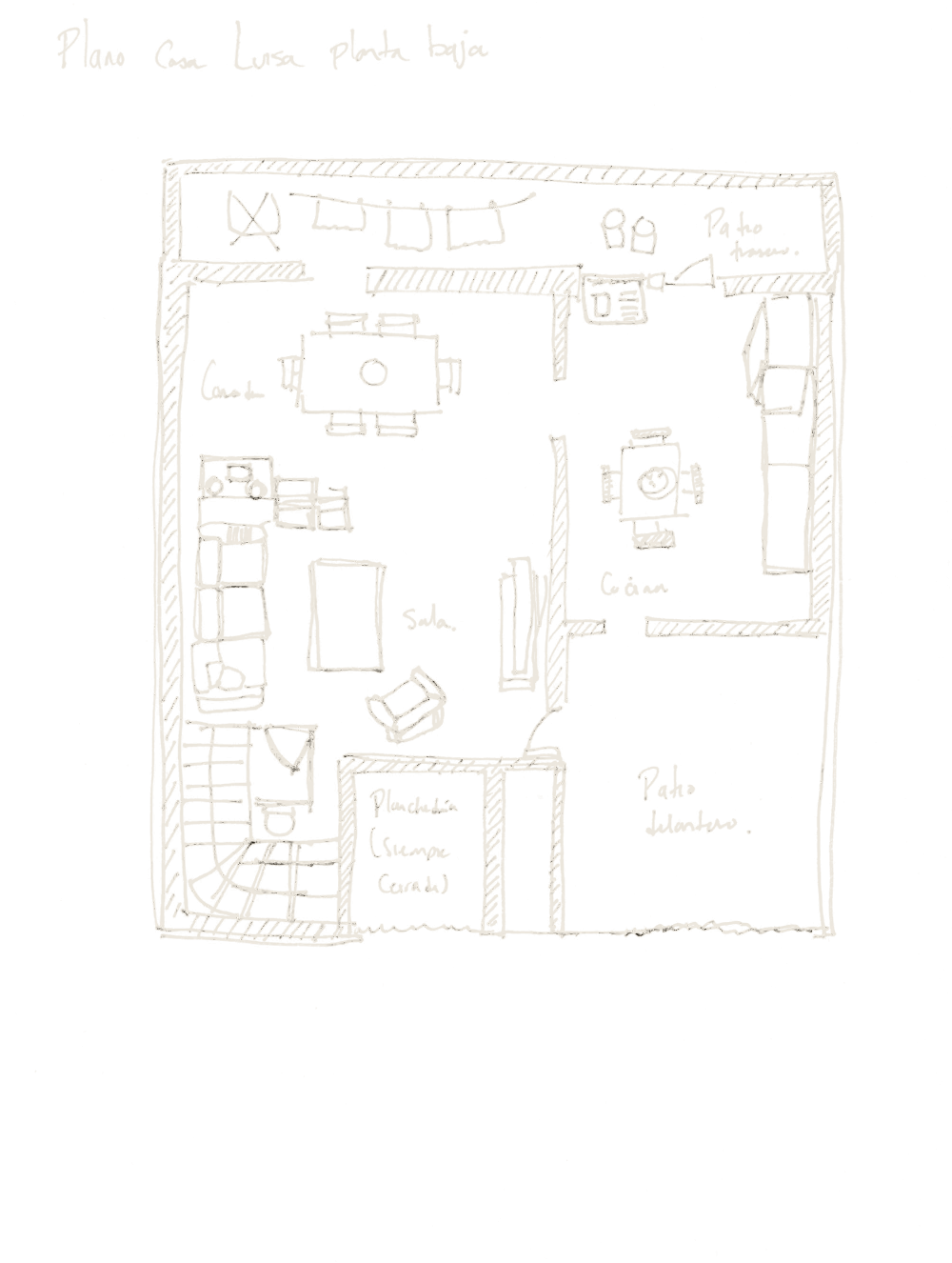
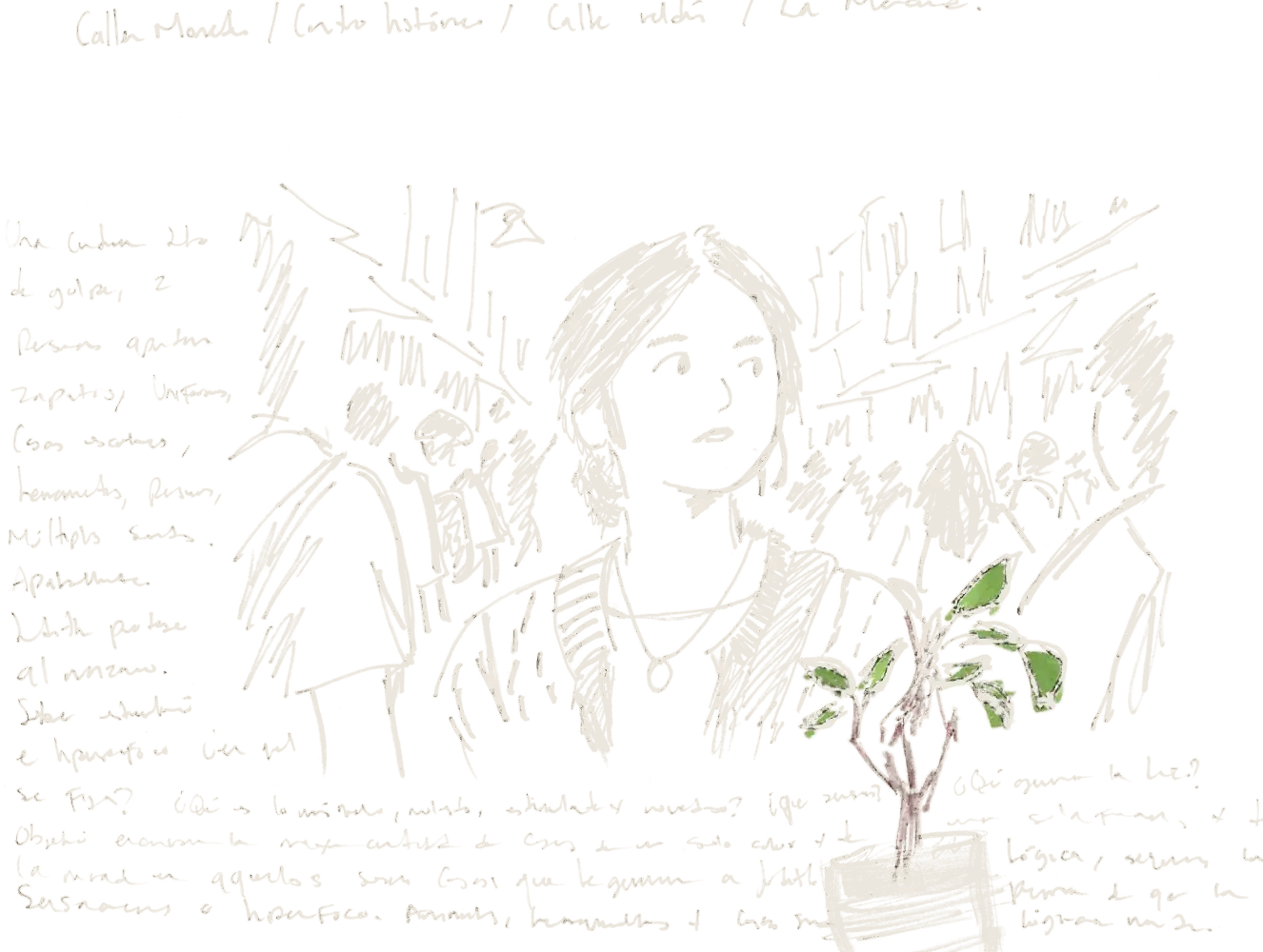
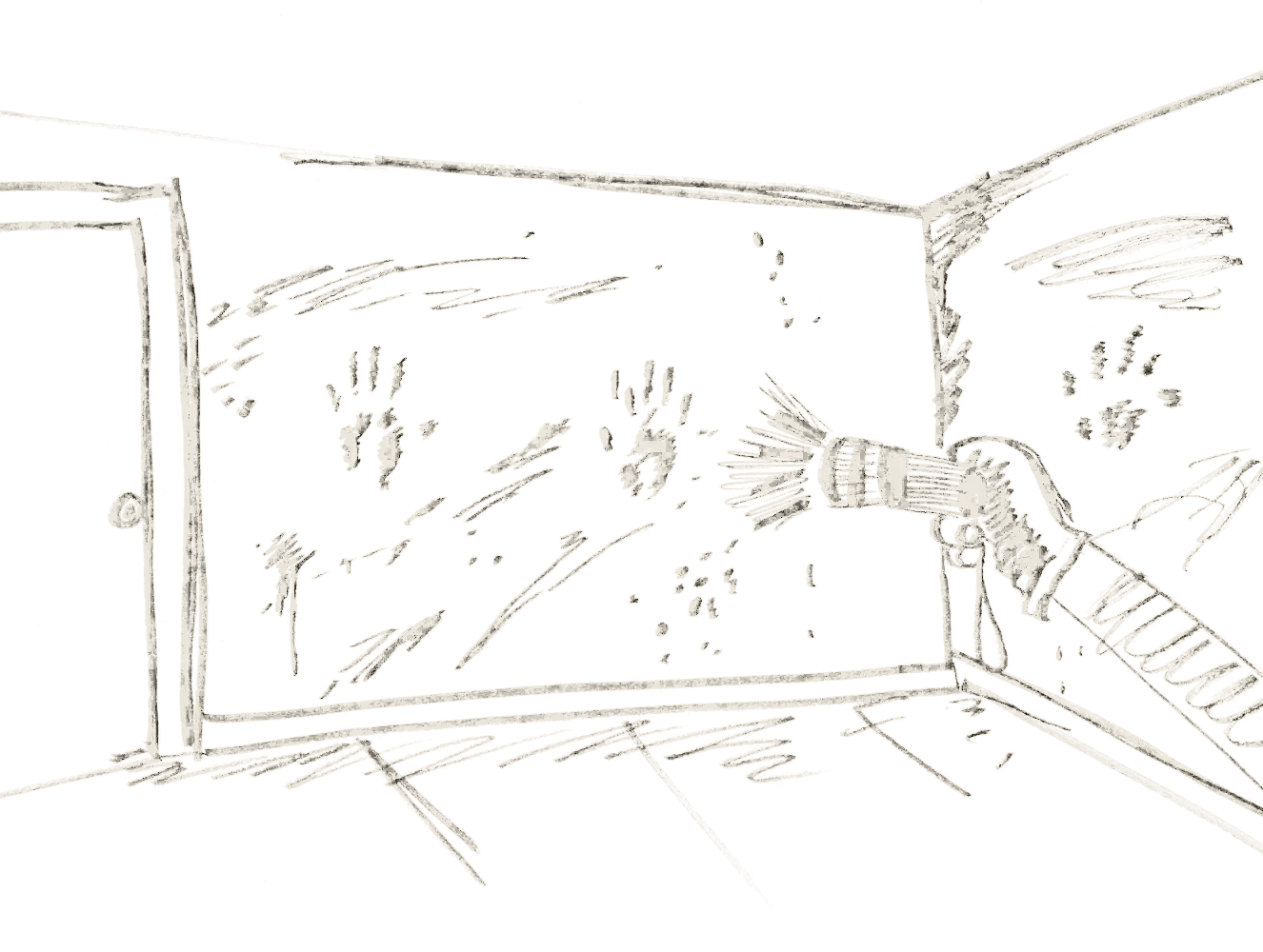
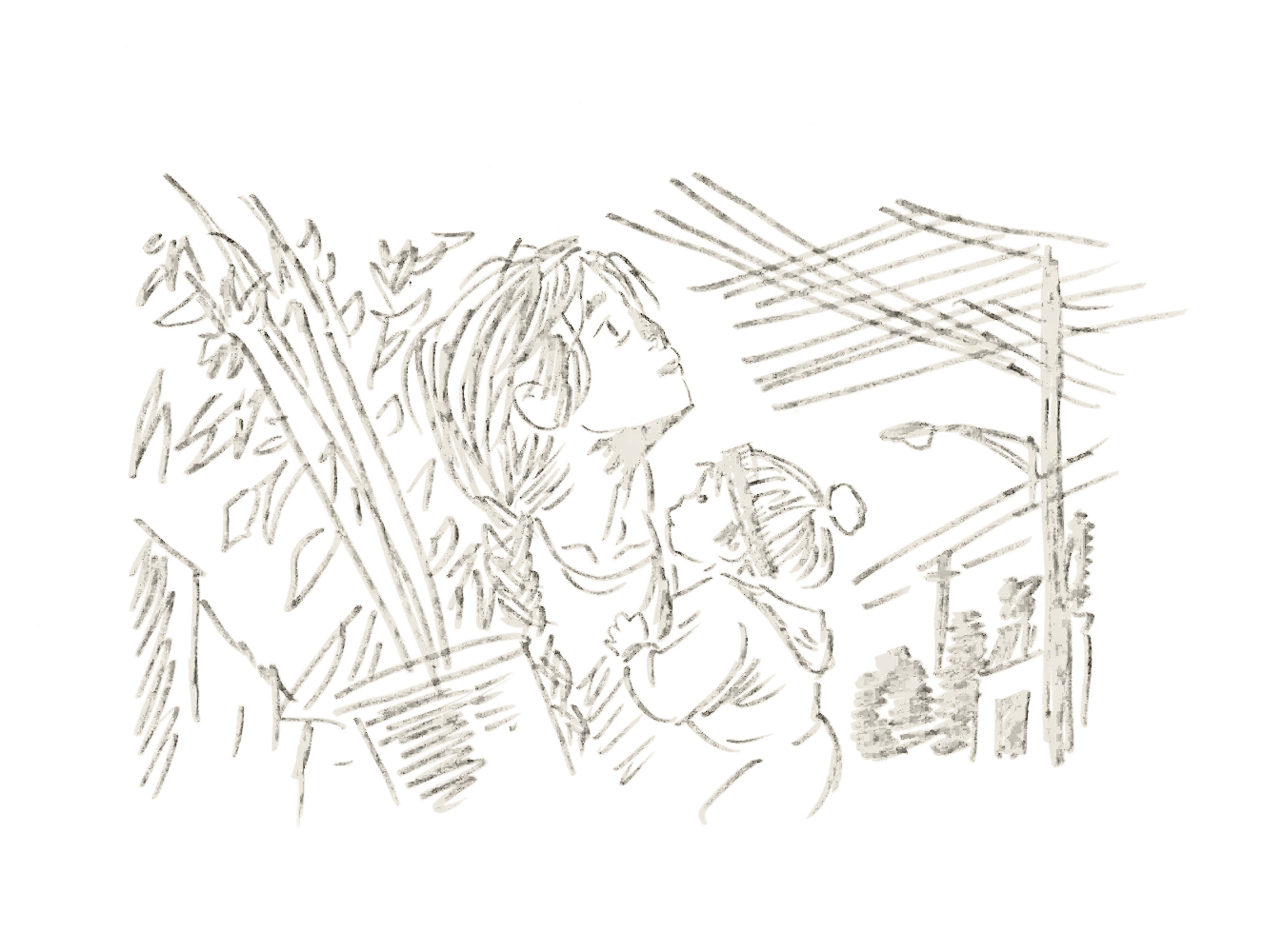
Before every scout and every rehearsal, the film exists on paper: Judith’s village beneath the volcano, the mill, Luisa’s house with furniture from other eras, the plan of every room. Hand drawings by Hellen H. Castro.
The teaser
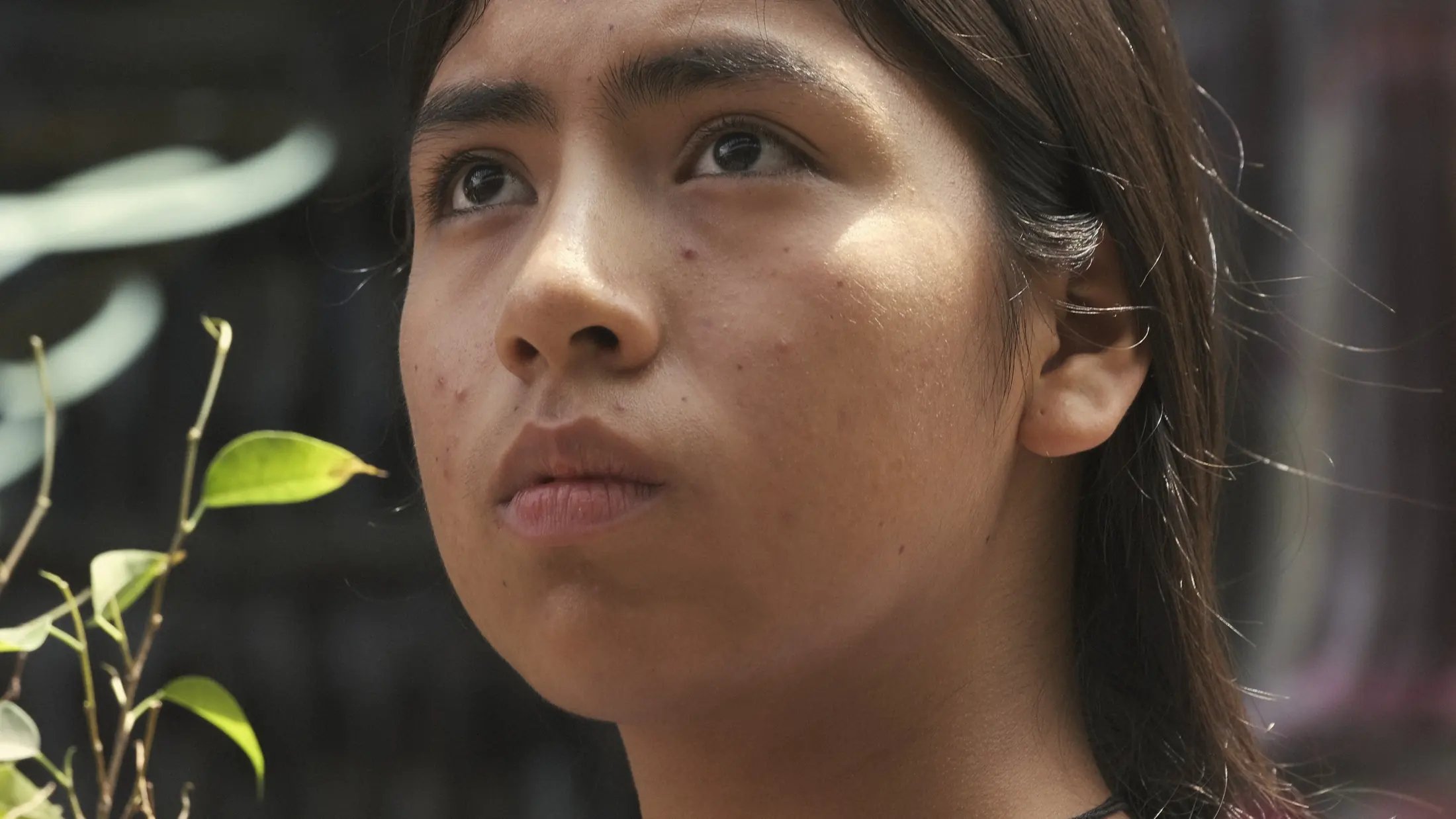
In September 2026 we shot two scenes without dialogue: Judith just arrived in Mexico City, her apple tree in her arms, amid the noise and the street stalls. Cinematography by Constanza Moctezuma, sound design by Jorge Leal Carrera.
Where the film is now
- Screenwriting workshop with Beatriz Novaro
- Screenwriting workshop with Yolanda Barraza
- Screenwriting residency at the EICTVInternational School of Film and Television, San Antonio de los Baños, Cuba.
- Script and director’s statementFirst complete draft of the script and the director’s statement.
- Winner of the DECINE 2026 grantProject Development Grant from IMCINE, the Mexican Film Institute, fiction category.
- Casting, cinematography, art and soundFirst casting notes for Judith and references for cinematography, art and sound design.
- FECIMX ClinicSynopsis, creative proposal and co-production strategy.
- GIFF IncubatorSelected for the Incubator of the Guanajuato International Film Festival.
- Casting and teaserCallbacks for Judith with Gabriela Velarde, location scouting and the teaser shoot in Mexico City.
- New visual and sound proposalWith Constanza Moctezuma, Daniela Sofía Main, Miroslava Millán and Jorge Leal Carrera. The story moves to the highlands of Morelos.
- Markets and callsApplication to NAHUI, the Mexico City film market, and a narrative treatment for the FICG industry call.
Team
Writer and directorHellen H. Castro
ProducerJuan Eduardo Navarrete Pajarito
Production companyLa Milpa Cine
CinematographyConstanza Moctezuma
Production designDaniela Sofía Main
Sound designMiroslava Millán and Jorge Leal Carrera
CastingGabriela Velarde
Co-production, funding and press
To see the full project dossier or to join the film.